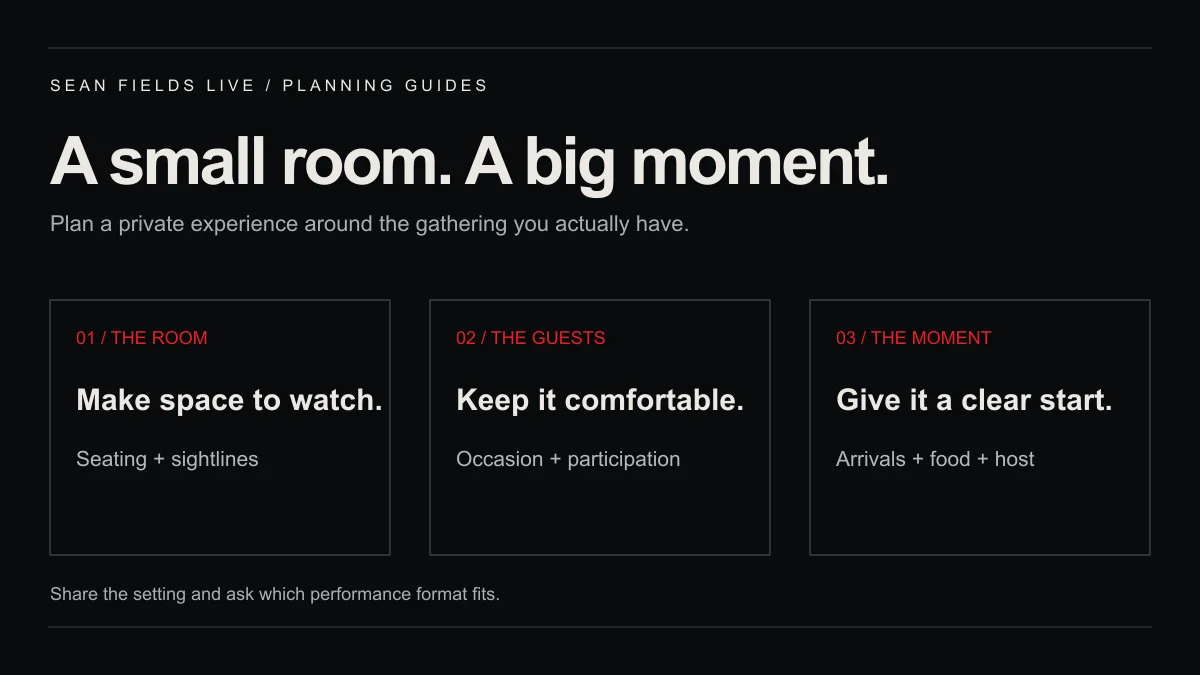
A private home can suit a small adult magic or mentalism experience when the room, audience and schedule work for it. Share the layout and occasion first. A small guest count can support an intimate shared show or small-group interaction; the performer should recommend the format for the setting.
Begin with the kind of gathering you are hosting
An adult birthday, anniversary, reunion or dinner with friends each has its own atmosphere. Start by explaining the occasion and whether entertainment should be the centrepiece or part of a longer social evening.
A Winnipeg magician for private parties can assess the plan using the guest count, room and schedule. Sean Fields offers private magic and mentalism experiences, with the format shaped around the group and setting.
Tell the performer that the booking is for adults. An adult house party and a children’s birthday are different briefs, even if both happen in a living room. Describe who will be present and the tone you want.
Choose between a shared feature and interaction during the party
If everyone is gathering for a meal or celebration, you may want a clear moment when the whole group watches together. If guests will circulate and arrive over time, a small-group format may be worth discussing.
Headcount alone does not decide the format. A small group can enjoy a focused shared performance, while a larger home can still have awkward sightlines or several separate social areas.
The close-up and shared-show comparison explains the tradeoffs. Ask for a recommendation before assuming that a home requires roaming magic or a large stage setup.
Describe the room as it will look during the party
Give the performer a simple description of the intended space: seating, open floor area, adjoining rooms, entrances and where people will gather. A room photo or basic sketch can help when shared directly for planning.
| Room detail | Useful information | Decision it helps with |
|---|---|---|
| Seating | Sofas, chairs, dining table and expected places for guests | How everyone can watch comfortably |
| Movement | Doors, service routes and people moving between rooms | Where the performance can fit without blocking access |
| Noise | Music, conversation and other activities | Whether the group can hear and focus |
| Timing | Arrivals, food and the planned entertainment moment | When the space and guests will be ready |
Do not promise a room rearrangement before it has been discussed. The venue requirements guide gives you a useful checklist even when the venue is your home.
Give the host a manageable job
Choose one person to coordinate arrival, introduce the performer and help gather the group at the agreed time. If the party is a surprise, that person should know the plan even if the guest of honour does not.
Coordinate food and drinks so the feature does not begin while people are collecting plates or waiting for a delivery. Mention other activities that may continue nearby and agree on a practical arrangement.
If pets, children or other household members will be present, explain that in the brief. The performer needs a realistic picture of the event rather than an assumption that every room will be quiet and every guest ready at once.
Plan the guest-of-honour moment without pressure
Tell the performer whether the person being celebrated enjoys attention, prefers to watch or has not been asked about participating. A special occasion does not require the host to nominate someone for an unwanted role.
Sean’s published approach is respectful participation without making a guest the punchline. Discuss how people are invited into the experience and any practical access considerations.
The audience participation guide helps you frame that conversation. Share relevant preferences rather than private stories you hope will become material.
A simple adult dinner-party plan
Here is a hypothetical sequence: guests arrive and settle in, the meal has its own space, then the host gathers everyone for a shared experience before the evening returns to conversation.
Adapt the order with the performer. If you prefer interaction during the arrival period, agree on coverage and the transition into dinner. A focused feature and roaming interaction should be quoted as the actual scope you need.
Keep the start and finish clear. If guests are likely to arrive late, tell the performer in advance and discuss the plan rather than assuming the show can wait indefinitely.
What to include in your private-party inquiry
- The occasion, date and Winnipeg location.
- Approximate guest count and the intended age group.
- A description of the room and seating.
- Arrival, meal and preferred performance timing.
- Whether the entertainment is a surprise and who is coordinating it.
- Any participation or practical access concerns.
The quote-scope guide explains the information that makes a proposal useful. Begin with what you know, mark estimates clearly and let the recommendation develop from the actual gathering.
A few more useful answers.
Does a small group need close-up rather than a shared show?
Not automatically. The room, timing and desired experience matter alongside attendance. Describe the gathering and ask which format fits.
Can the performance be a surprise for the guest of honour?
Discuss the surprise with the performer and identify a host who knows the plan. Explain the guest’s comfort with attention and agree on arrival and introduction arrangements.
Do we need to move all the furniture?
Share the layout first and confirm any necessary changes with the performer. Do not assume a particular arrangement or move furniture based only on a generic checklist.
What if our private party is at a rented home?
Check the property’s guest, event and outside-entertainer rules with the host before confirming the plan. A rental reservation does not establish that every proposed activity is permitted.

Sean Fields
Sean Fields is a Winnipeg-born magician, mentalist, magic creator and consultant with more than two decades of experience. His work spans close-up magic, corporate stages and creative consulting for television productions. These guides help organizers plan the setting, timing and guest experience for live entertainment.
More about Sean Fields