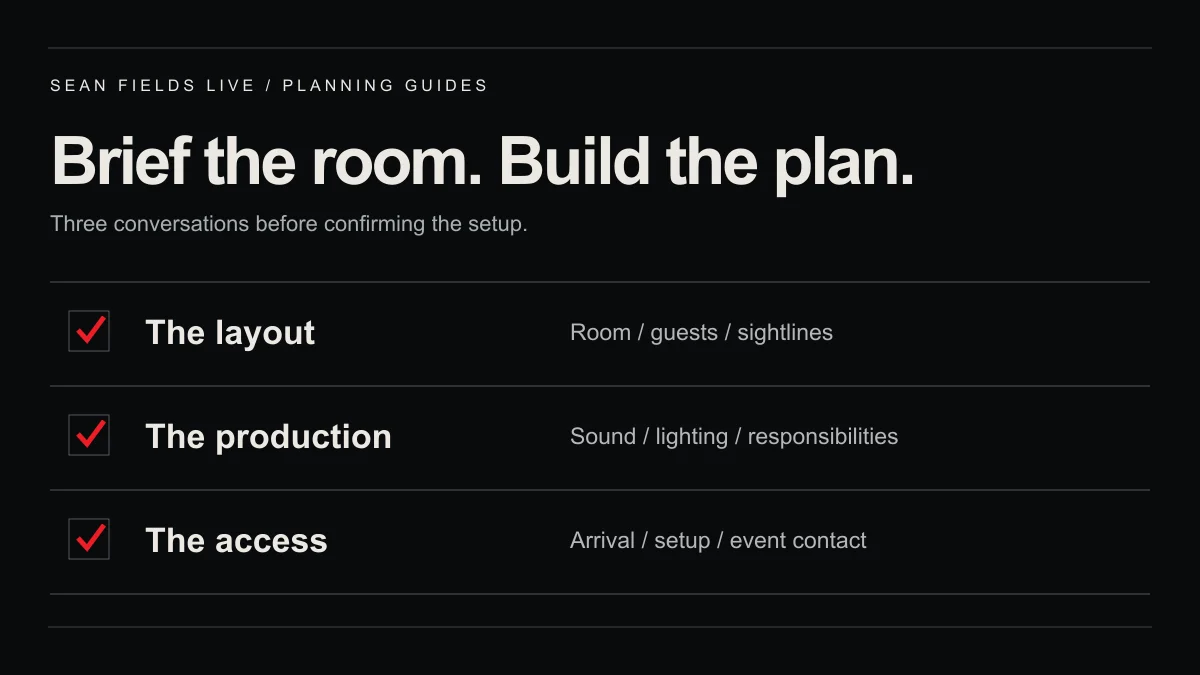
Start with the actual room, audience layout and schedule. Confirm sightlines, sound, lighting, access and who supplies and operates any equipment. There is no universal stage size or technical package for every magic show; agree on requirements for the specific format and venue.
Send the booked room, not just the facility name
A venue can contain a ballroom, meeting rooms, a lounge and an outdoor space. Those settings do not offer the same performance conditions, even when they share an address.
When arranging entertainment with a professional magician in Winnipeg, send the room name, expected attendance and a floorplan or straightforward layout description. Include whether guests will sit at tables, stand or move between spaces.
For larger venues, start with official information. The RBC Convention Centre Winnipeg floorplans illustrate how a facility identifies its different spaces. Use current venue documents and confirm the actual event arrangement; this reference does not imply a partnership or past performance.
Confirm the format before assuming the equipment
Close-up interaction among small groups and a shared featured show create different needs. A hybrid may need both reception access and a defined performance position later.
The phrase “stage show” does not specify one universal platform, microphone or lighting package. Ask the performer what the agreed audience and room require before booking equipment or telling the venue that everything is covered.
If the format is still undecided, read the close-up versus stage guide. Send what the venue already provides as information to review, not as a guarantee that it meets the performance needs.
Give every guest a realistic view
Share the seating plan, proposed performance position and any features that could block views. A room that seats the expected number of guests is not automatically arranged so everyone can watch one focal point.
Discuss columns, long table layouts, screens, existing stages and whether chairs need to turn. Ask how guests at the sides or back will follow the experience. Leave any required adjustments to be agreed with the venue and performer.
For close-up interaction, the planning question is different: can the performer approach groups without obstructing service, access or guest movement? Identify queues, narrow areas and any space reserved for another activity.
Agree on sound, lighting and the person operating them
Describe the room’s normal noise level and what else will be happening. Background music, adjacent events and food service may affect whether guests can hear and concentrate.
- What sound system and microphones does the venue have?
- Who confirms that the proposed equipment suits the show?
- Who operates sound and any agreed lighting cues?
- When can equipment be checked in the actual room?
- Who is the event-day technical contact?
A system being installed in the building does not resolve those responsibilities. Let the performer and venue team confirm compatibility and safe operation. This checklist is a planning brief, not instructions for electrical or rigging work.
Allow for arrival, setup and room access
Confirm the correct entrance, event contact and access window. Tell the performer if the room will be in use until shortly before the show or if there is a change of space between reception and dinner.
Include any venue procedures that affect arrival or equipment delivery. If the event is outside Winnipeg, provide the full location and finish time early enough to review travel and accommodation where needed.
Do not assume setup can happen while guests are taking their seats. Agree on a workable window with the venue and performer, including when any equipment checks can take place.
Put responsibilities in one shared plan
| Planning item | Information to share | Responsibility to confirm |
|---|---|---|
| Room and layout | Exact room, guest estimate, seating or standing plan | Who approves the performance position and layout |
| Production | Available sound, lighting and any staging | Who supplies, checks and operates agreed equipment |
| Access | Entrance, contact and room-access window | Who meets the performer and resolves access issues |
| Program | Meals, speeches, show slot and finish time | Who makes event-day timing decisions |
These are roles to agree, not an assumption that the venue or performer automatically supplies each item. Keep the approved plan accessible to everyone delivering the event.
Review changes before event day
Tell the performer when the room, audience size, schedule or format changes. A new arrangement may affect visibility, production or the agreed scope.
For outdoor concepts, discuss a weather backup and a controlled performance area before confirming the plan. Avoid treating indoor requirements as a complete specification for an outdoor setting.
Use the booking checklist for unresolved questions and the show-scheduling guide to coordinate the feature with meals and speeches. A clear room brief makes both conversations easier.
A few more useful answers.
Does every magic show need a raised stage?
No universal requirement applies. Share the room, audience layout and format so the performer can confirm visibility and any staging needs.
Should we rent a microphone before discussing the show?
Confirm the performance requirements and available venue equipment first. Agree on who supplies, checks and operates the system before arranging rentals.
Is a venue floorplan enough to finalize the setup?
A floorplan is a useful starting point. Confirm the actual seating, performance position, service arrangement and technical responsibilities with the venue and performer.
What if we change rooms after booking?
Tell the performer as soon as possible and review layout, access, sound and timing again. The new room may change the recommended setup or scope.

Sean Fields
Sean Fields is a Winnipeg-born magician, mentalist, magic creator and consultant with more than two decades of experience. His work spans close-up magic, corporate stages and creative consulting for television productions. These guides help organizers plan the setting, timing and guest experience for live entertainment.
More about Sean Fields