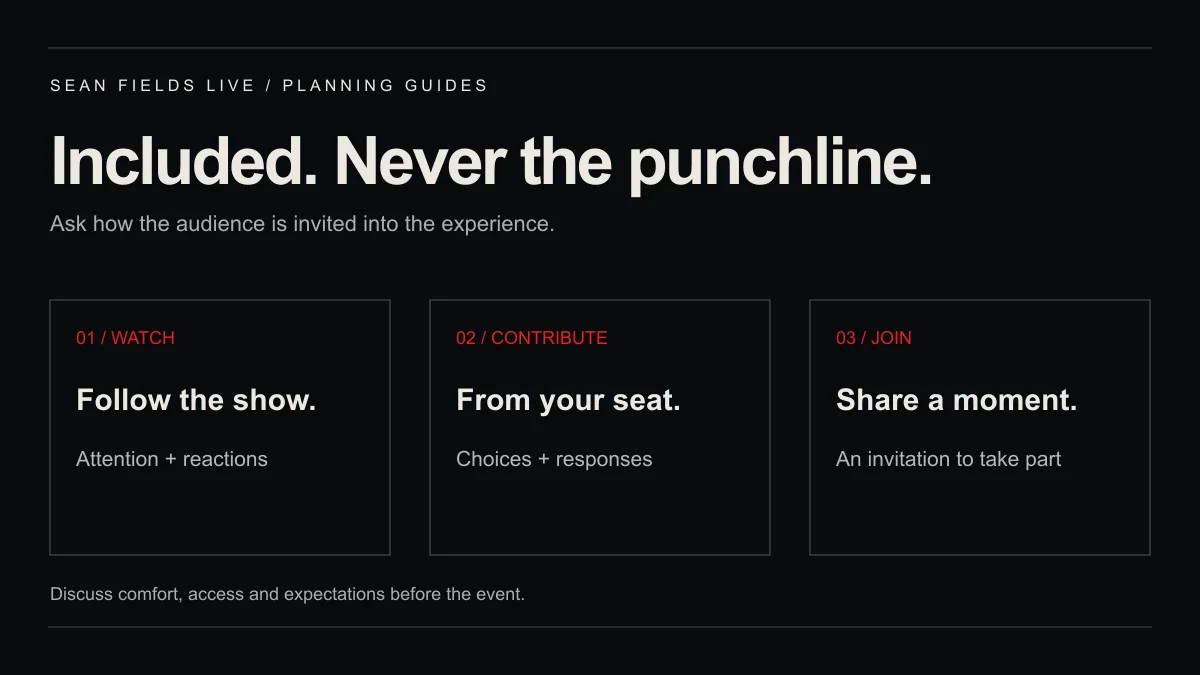
Interactive entertainment does not have to mean making someone the joke. Ask how participation is invited, what guests may be asked to do and how someone can remain a spectator. Sean’s published approach is respectful participation without putting guests down; discuss particular concerns before the event.
Interactive can describe several different experiences
A host may hear “interactive” and picture a reluctant colleague being pulled onto a stage. That is only one possible interpretation. A performance can involve a room making choices together, someone contributing from a seat, or a small group reacting to something happening close by.
The useful question is what participation means in the proposed show. Ask about the actual format and audience experience rather than relying on the word alone.
Winnipeg magician Sean Fields describes his approach as inviting guests into the impossible moment without making them the punchline. If your group has concerns about attention or involvement, include those in the event brief.
Watching, contributing and joining are different roles
These are questions to discuss with a performer, not a promise that every show offers exactly the same options.
| Possible role | What it might involve | What the organizer should clarify |
|---|---|---|
| Watching | Following the experience without an individual task | How guests can comfortably remain spectators |
| Contributing from a seat | A choice, answer or shared response | Whether individual responses are invited and audible |
| Joining a moment | Taking part near the performer or in a small group | How invitations, access and personal comfort are handled |
Do not announce that a particular employee or guest will participate before checking with them and the performer. Planning a surprise is different from committing someone else to an unwanted role.
Ask about comfort before asking about volunteers
Start with the tone of your event. A formal client dinner, a relaxed staff gathering and a private celebration can have different expectations about attention. Explain the atmosphere you want and what you are worried about.
- How are guests invited to participate?
- What kinds of contributions might they be asked for?
- How is it handled when someone prefers to watch?
- Can the experience work without centring the guest of honour?
- What should the host avoid saying during the introduction?
Get clear answers rather than treating a promise of “lots of audience interaction” as the whole specification. The booking checklist covers the other questions that belong alongside participation.
Brief the guest-of-honour moment with care
Wanting a memorable moment for someone does not establish how much attention they enjoy. Tell the performer if the person would prefer to watch, is comfortable with a short contribution or has not been asked about participating.
A useful brief is practical: “We would like to acknowledge the guest of honour, but they prefer not to come to the front.” Avoid sending private stories, workplace gossip or personal information to turn into material.
For a private celebration, agree on the tone and the host’s role in advance. The performance should fit the occasion rather than require the organizer to persuade a reluctant guest on the night.
Guest comfort also depends on the room
Participation is not only about personality. Guests need to be able to follow the show, hear contributions and understand an invitation. A difficult layout or noisy service can make a simple interaction feel unclear.
Discuss access requirements in practical terms and share only information needed for the arrangement. Do not assume a guest can move through tightly packed tables or use steps. Confirm any route or seating considerations with the venue and performer.
The venue-planning checklist explains what room details to share. The show-format comparison helps you decide whether interaction happens among small groups or as part of a shared feature.
A useful host introduction sets expectations
Confirm the introduction with the performer. Keep it clear and brief: introduce the entertainment, give people a reason to focus and let the performer establish how the experience works.
Avoid promising that someone will be embarrassed or telling the room to nominate a reluctant colleague. Those comments can create anxiety before the performance starts, even when the show itself is respectful.
Also agree on practical cues. If guests need to pause conversations, turn their seats or settle after dinner, the introduction should happen when the room is ready—not while the venue is still delivering plates.
Add a few useful lines to your event brief
- Who the audience is and the atmosphere you want.
- Whether there is a guest of honour and what involvement they are comfortable with.
- Any concerns about unwanted attention.
- Practical access or seating arrangements that need coordination.
- Who will introduce the performance and control the running order.
You do not need to script the show. Give the performer enough context to recommend an experience that fits your guests, then confirm the participation approach along with the rest of the event plan.
A few more useful answers.
Does interactive mean everyone has to take a turn?
No single participation pattern applies to every show. Ask how the proposed performance involves the audience and how guests can remain spectators.
Should we nominate someone to participate before the show?
Discuss any proposed role with that person and the performer first. Do not commit a guest to an unwanted part simply because they are the guest of honour or a colleague.
Can a guest remain seated while contributing?
Ask the performer about the proposed material and arrangement. Explain practical access or seating needs rather than assuming every contribution requires coming to the front.
Should we send personal facts about guests for the show?
Do not send unnecessary private information. Start with the audience, occasion and participation concerns; ask the performer if any additional planning details are needed.

Sean Fields
Sean Fields is a Winnipeg-born magician, mentalist, magic creator and consultant with more than two decades of experience. His work spans close-up magic, corporate stages and creative consulting for television productions. These guides help organizers plan the setting, timing and guest experience for live entertainment.
More about Sean Fields