Choose what the entertainment should do, agree on the room and meal-service plan, then give the performance a clear place in the program. Close-up interaction, a shared show and a hybrid serve different purposes. Check actual date availability directly; no universal booking deadline guarantees a slot.
Decide what you want the evening to feel like
A company holiday party can include people who work closely together, guests meeting for the first time and colleagues who would rather talk than follow a packed agenda. Start with the audience and purpose before choosing another item for the schedule.
Do you want a relaxed reception, a shared feature everyone can talk about afterward, or both? That answer helps a corporate magician in Winnipeg recommend a format that fits the program.
Sean’s corporate options include close-up encounters, a typically 30–45 minute interactive stage experience and a hybrid. The final timing and production requirements should be agreed for your event. This guide provides a planning framework, not a statement of current availability.
Give each performance format a clear job
Close-up during the reception
Small-group interaction can give guests a conversation point during arrivals or cocktails. Coordinate it with queues, announcements and any background music so the performer is not competing with the flow of the room.
A shared feature after dinner
A defined show slot works when guests can see, hear and focus together. Ask the venue when plates will be cleared, who introduces the performer and whether speeches or awards sit before or after the feature.
A hybrid across the evening
A hybrid can combine reception interactions with a shared feature. Confirm both blocks, the gap between them and any room change. The performance commitment is broader than simply adding two durations together.
The format comparison explains those tradeoffs in more detail.
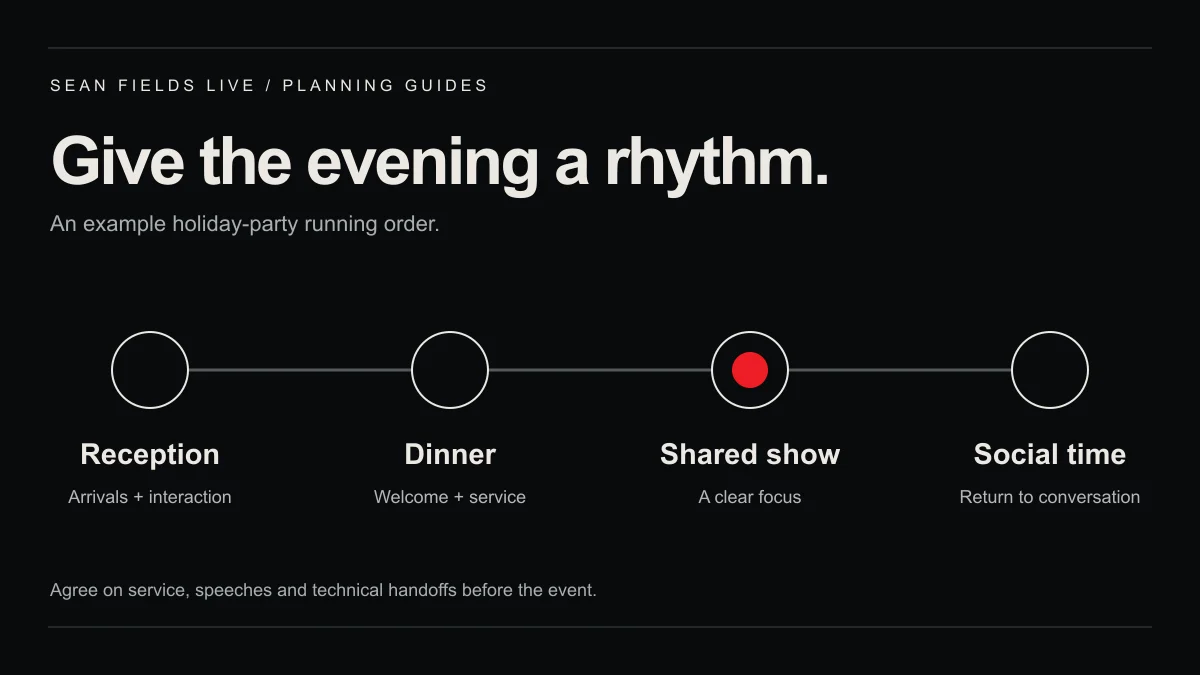
A sample dinner-and-show program
The following is a hypothetical running order, not a fixed package or a past client event. Adjust the timings with your venue and performer.
| Program block | Planning purpose | Handoff to confirm |
|---|---|---|
| Guest arrivals and reception | Let people settle in and connect; optional close-up interaction | Arrival flow, music and announcement timing |
| Welcome and dinner | Give the meal and host remarks their own space | Service and clearing schedule |
| Shared feature | Bring the room’s attention together | Introduction, sound check and clear sightlines |
| Closing remarks and social time | Finish the formal program and return to conversation | Who closes and what starts next |
If awards are an important part of the evening, decide where they belong before confirming the show slot. There is no single correct order: the point is that everyone delivering the event works from the same version.
Plan for the actual room, not just the venue name
A facility may have several spaces with different layouts, sound systems and access arrangements. Give the performer the booked room name, guest estimate and proposed seating plan. Confirm whether other activities or another event will be audible nearby.
Use official venue information rather than guessing from promotional photos. For example, the RBC Convention Centre Winnipeg floorplans show different floors and spaces that an organizer can identify when briefing an event. This is planning context, not a claim of endorsement or prior performance.
- Can every seated guest see the intended performance position?
- What microphone, sound and lighting are available, and who operates them?
- When can setup and any sound check happen?
- Will food service or a bar queue compete with the show?
- Who is the venue’s event-day contact?
Make participation comfortable for the whole company
Tell the performer whether the event includes partners, clients or a guest of honour, and describe any expectations about tone. Do not assume that “interactive” means employees must volunteer publicly or become the joke.
Sean’s published approach is clean, respectful entertainment that invites people into the experience. Mention concerns about unwanted attention in the brief. Let the performer and host agree on how participation will be introduced.
Confirm availability and responsibilities early in the process
Once you know a likely date, city, venue and guest estimate, make the inquiry. If the plan is for an upcoming November or December event, share the actual date and any flexibility; do not assume that a calendar date is available or that it is already gone.
The guide to when to book a magician separates the initial inquiry, date confirmation and production milestones. A clear proposal should identify the agreed format, performance blocks and responsibilities.
Use the cost and quote-scope guide when comparing options. Confirm travel if the event is outside Winnipeg, applicable taxes, payment milestones and how changes to the program are handled.
Send one clear brief to everyone involved
Before the event, bring the organizer, venue contact and performer onto the same running order. Include arrival access, exact room, audience estimate, technical responsibilities, meal timing, introductions and the performance slot.
Identify who can make a timing decision if dinner or speeches run late. Discuss the available options in advance rather than assuming the performance can expand, move or finish later without consequence.
The result is a workable event plan: people know when to talk, when to eat and when to focus on the impossible.
A few more useful answers.
Do we need a stage for a company holiday-party show?
Do not assume a standard setup. Share the actual room, guest count and layout so the performer can confirm visibility, sound and any staging requirements.
Can close-up magic and a featured show happen on the same evening?
Yes, a hybrid can combine both. Confirm the two time blocks, any room change and the full scope in the proposal.
What if dinner runs late?
Agree in advance who controls the running order and how timing changes will be handled. Tell the performer about known constraints; do not assume extra waiting or a later finish is automatically included.
Is it too late to inquire about a holiday date?
Ask about the actual date and share any flexibility. Availability changes, and neither a general lead-time rule nor a guide can establish whether a specific slot is open.

Sean Fields
Sean Fields is a Winnipeg-born magician, mentalist, magic creator and consultant with more than two decades of experience. His work spans close-up magic, corporate stages and creative consulting for television productions. These guides help organizers plan the setting, timing and guest experience for live entertainment.
More about Sean Fields