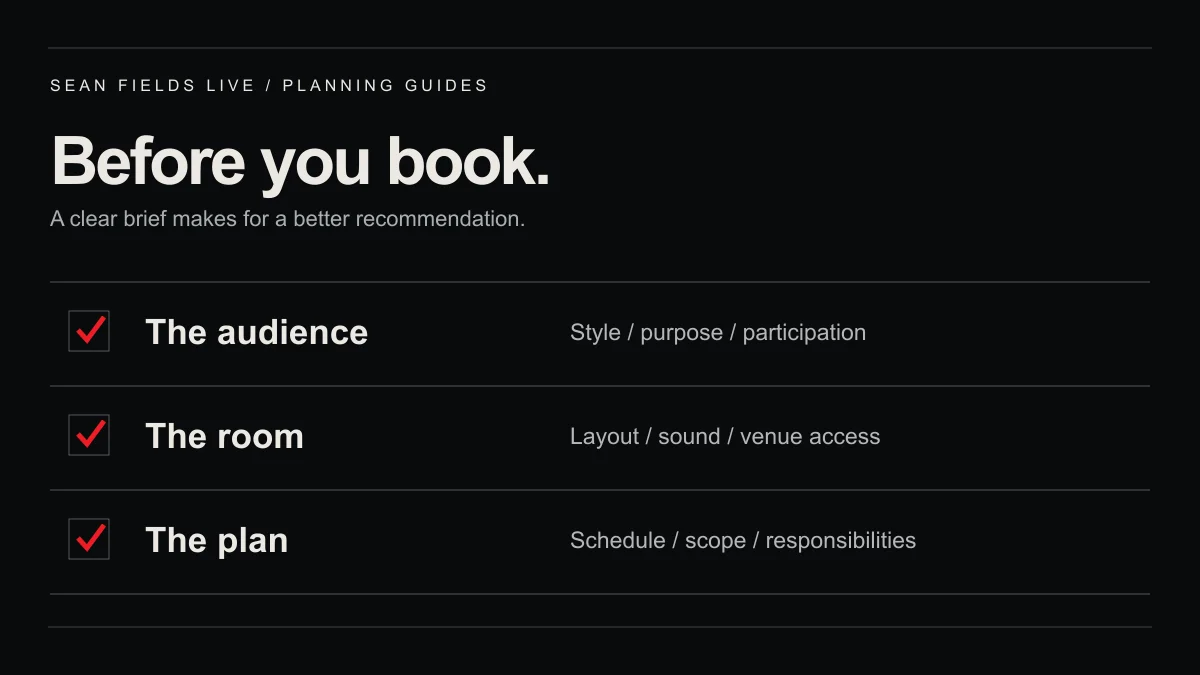
Before you confirm a magician, establish who the show is for, how guests will participate, what the venue must provide and exactly what the proposal covers. A clear event brief is more useful than choosing from a reel or a price alone.
First ask: what should the entertainment do?
Do you want a reception icebreaker, a shared moment after dinner, or an intimate experience for a private group? Those are different jobs. Deciding the purpose first makes the rest of the booking conversation more useful.
When choosing a magician in Winnipeg, explain what is happening around the performance as well as the performance itself. A show competing with food service, speeches or another activity may need a different time or format.
This checklist is intended for adult corporate and private events. If you need children’s entertainment, a school show or another specialty, establish that audience fit directly rather than assuming every magician offers it.
1. Is this performance right for our audience?
Describe the guests: coworkers, clients, a mixed company gathering or a private celebration. Include the approximate number of people, whether they already know one another, and any tone or participation concerns.
- Is the material suited to our event and age group?
- Is the experience mainly close-up, a shared show or both?
- How does the performance work for guests who prefer to watch?
- What would make this room or schedule a poor fit?
A useful recommendation should connect the format to your circumstances. If you are uncertain about terminology, the show-format guide compares the practical differences.
2. What does the reel show—and what should we ask about?
A reel helps you understand style and energy, but it is an edited introduction. Ask how the proposed performance compares with what you watched: the setting, level of interaction, size of audience and type of material.
Read available testimonials for context rather than treating every endorsement as interchangeable. A comment from a corporate organizer may answer different questions from one written after a small private party. If a particular reference matters, ask whether an appropriate reference can be provided.
For Sean’s background, the About Sean Fields page describes his Winnipeg roots, performance work and creative consulting. Keep factual credentials separate from deciding whether the style fits your guests.
3. How will guests be invited to participate?
“Interactive” can mean an entire room making choices, a small group watching closely or someone joining the performer. Ask what participation looks like rather than assuming it means guests must stand on stage.
Sean’s published approach is respectful participation without making guests the punchline. Share any concerns in advance, including a guest of honour who dislikes attention. If an individual has accessibility needs, discuss the practical arrangement without sharing unnecessary personal information.
4. What must the venue and organizer provide?
Send the actual room name, not only the facility name. Then establish seating, sightlines, noise, lighting, microphone needs, access and setup timing. A venue with several rooms may offer very different performance conditions in each.
For larger venues, use the venue’s own information when sharing a plan. The RBC Convention Centre Winnipeg floorplans are an example of the kind of primary source to use. Naming a venue here does not imply a partnership or prior performance there.
- Who is the event-day production contact?
- Who supplies and operates any agreed sound or lighting?
- When can the performer access the room?
- Will dinner service or another activity continue during the show?
- Is there a weather backup for an outdoor concept?
5. Does the proposal describe the same event we discussed?
Check the date, address, performance block, format and responsibilities. Confirm the total, applicable taxes, travel, payment milestones and what happens if the date, program or scope changes. Review the actual agreement; this checklist is not a substitute for its terms.
The Winnipeg magician cost guide explains why two proposals can differ even when the show lengths look similar. Compare equivalent coverage and production assumptions before deciding on price.
A booking brief you can use
Gather these details in one place before your inquiry. Estimates are useful when clearly labelled.
- Event name, purpose and audience.
- Date, venue, city and exact room if known.
- Guest estimate and seated or standing layout.
- Arrival, meal, speeches, entertainment and finish times.
- Preferred format—or the decision you need help making.
- Known production arrangements and venue contact.
- Budget parameters and any participation concerns.
Once those details are collected, send the event brief. The next useful step is a recommendation that fits the room, followed by a clear written proposal.
A few more useful answers.
Should I choose a show before finalizing the schedule?
Discuss both together. The entertainment format affects when guests need to focus, while meals, speeches and venue access affect where the show can fit.
Can I book when some details are still estimates?
You can begin an inquiry with estimates. Clearly identify what is unsettled, and confirm what must be finalized before the booking or production plan is agreed.
Does every magician perform for children and adults?
No. Performers can specialize in different audiences and styles. Describe your guests and confirm that the proposed material is appropriate for them.
Should I arrange sound before contacting the performer?
Share what the venue has available, but confirm the performance requirements before ordering equipment. This helps avoid assumptions or unnecessary rentals.

Sean Fields
Sean Fields is a Winnipeg-born magician, mentalist, magic creator and consultant with more than two decades of experience. His work spans close-up magic, corporate stages and creative consulting for television productions. These guides help organizers plan the setting, timing and guest experience for live entertainment.
More about Sean Fields